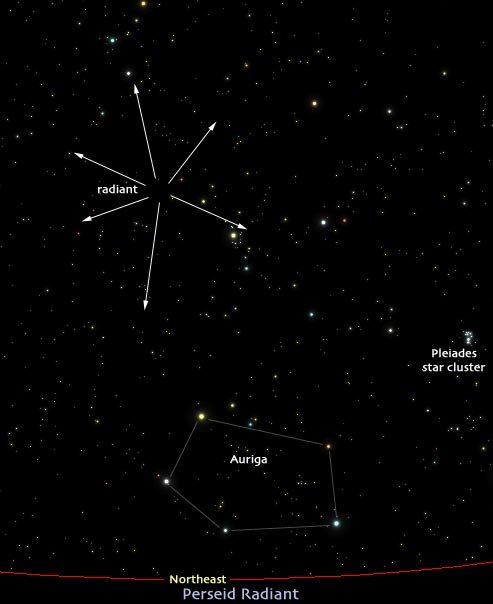
Perseid meteor shower
This shower peaks in mid-August, when Earth intersects the dust cloud left by comet Swift-Tuttle.


Enter . As the latest major iteration of a software lineage that began in the Windows 95 era, WinImage 11 remains the gold standard for low-level disk imaging. Whether you are trying to recover data from a 20-year-old Zip drive, preparing a virtual floppy for a VM, or building a bootable BIOS update, WinImage 11 offers the precision and compatibility that modern all-in-one tools often lack.
Version 11 modernizes the interface without dumbing down the power. It is fast, stable, and deeply knowledgeable about file systems that younger developers have never seen. winimage 11
In the modern era of multi-terabyte SSDs and cloud storage, the humble floppy disk and legacy hard drive structure feel like ancient history. However, for system administrators, retro-computing enthusiasts, and embedded systems engineers, the ability to create, read, and manipulate raw disk images is not just a convenience—it is a necessity. Version 11 modernizes the interface without dumbing down
This article provides a deep dive into WinImage 11, exploring its history, core features, new enhancements, use cases, and a step-by-step guide to mastering its workflow. Before focusing on version 11 specifically, it is important to understand the software's legacy. WinImage was originally developed by Gilles Vollant Software in the late 1990s. At the time, physical floppy disks were the primary means of data transfer. The problem was that floppy disks were notoriously unreliable. emulate the disk
Once the reading is complete (you will see the file list of COMMAND.COM , IO.SYS , etc.), go to File > Save As . Select “Disk Image file (*.IMA)” from the dropdown. Name your file DOS_BOOT.IMA . Click Save.
WinImage solved this by allowing users to create an image file (typically .IMA or .IMZ for compressed images) that served as a perfect sector-by-sector clone of a disk. This allowed users to store the contents of a disk on a hard drive, emulate the disk, or write the image back to a physical disk.