Webtile Network Discovery May 2026
Whether you are securing a critical power grid or managing Wi-Fi for a university campus, the question is no longer "What is my IP address?" but rather "Where is my tile?"
Problem: DHCP IPs change. Laptops move. A static tile coordinate (e.g., "192.168.1.x") becomes obsolete when a device moves to a new subnet. Solution: Use Device Fingerprinting . Instead of storing an IP, store a fingerprint (MAC address + Hostname + OS fingerprint). The tile generator updates the coordinates every discovery cycle. If the fingerprint moves, the tile moves. Webtile Network Discovery
By adopting the "slippy map" metaphor, Webtile Discovery transforms raw, overwhelming SNMP and flow data into an intuitive, human-centric visual language. It allows engineers to see the forest (the entire WAN at zoom 0) and the leaves (a specific container's CPU usage at zoom 18) without losing context. Whether you are securing a critical power grid
This article explores the architecture, mechanics, applications, and future of Webtile Network Discovery, and why it is becoming an indispensable tool for DevOps engineers, security analysts, and network architects. Traditional network discovery tools (like Nmap, SolarWinds, or PRTG) generate static or semi-static diagrams (nodes and edges). While functional, these diagrams struggle with large scale. A network with 10,000 devices becomes an incomprehensible "spaghetti bowl" of connections. Solution: Use Device Fingerprinting
| Protocol | Role in Webtile Discovery | | :--- | :--- | | | Pulls ARP tables, interface status, and neighbor info from switches/routers to generate inter-rack tiles. | | LLDP / CDP | Maps physical adjacency (Switch A port 24 is connected to Switch B). This defines the "roads" between tiles. | | mDNS / DNS-SD | Discovers IoT devices, printers, and Apple devices for granular home/office tiles. | | WSD (Web Services Discovery) | Finds Windows devices and network printers on local subnets. | | ICMP (ping) | Determines latency. Low latency nodes cluster together; high latency (satellite links) creates distant tiles. | | NetFlow / sFlow | Provides traffic heatmaps. A tile might glow red if the aggregated flow exceeds 80% capacity. | Part 4: Use Cases Across Industries Webtile Network Discovery is not an academic exercise. It solves real operational pain points. 1. Large-Scale Data Center Management (Hyperscalers) Problem: A data center with 100,000 servers. An admin needs to find all Windows Server 2019 instances with a specific CVE. Solution: The Webtile view zooms out to show the entire data center floor. Red tiles indicate vulnerable sections. The admin zooms in on the red tile, sees the specific rack, and patches exactly 42 servers without affecting adjacent racks. 2. OT / Industrial IoT (Smart Factories) Problem: Industrial control systems (PLCs) rarely update their inventory. A technician needs to locate a specific pressure sensor reporting anomalies. Solution: The Webtile map is overlaid on the factory blueprint (imported as a custom raster tile). The technician sees the sensor blinking on the map at X/Y coordinates corresponding to "Zone B, Conveyor 4." 3. Managed Service Providers (MSPs) Problem: An MSP manages 500 client sites. A single dashboard is unreadable. Solution: Zoom level 0 shows a world map with a tile for each client city. Zoom level 1 shows a tile for each building in that city. Zoom level 2 shows the internal network of that single office. This provides geographical and logical hierarchy simultaneously. 4. Cybersecurity Incident Response Problem: A zero-day exploit is detected on port 445. The security team needs to know exactly which assets are exposed. Solution: The Webtile discovery engine scans for port 445 and generates a "vulnerability overlay." The security analyst shares a static URL of the vulnerable tile with the patching team. "Fix everything inside this hexagon." Part 5: Challenges and Solutions Implementing Webtile Network Discovery is not trivial. Here are the primary hurdles:
Problem: Generating a complex tile (e.g., showing 500 nodes with connection lines) takes 500ms. Panning the map feels laggy. Solution: Predictive Pre-fetching . The client detects the user's pan direction (e.g., moving East). It requests tiles for the East quadrant before the user finishes panning. Part 6: Implementing a Basic Webtile Discovery System (Proof of Concept) If you are a developer looking to build a prototype, here is a simplified tech stack and logic.
Keywords integrated: Webtile Network Discovery, network mapping, topology visualization, active probing, SNMP, spatial hashing, predictive tiling, OT security, incident response, slippy maps.
1.What is VPN?
A virtual private network (VPN), defined as a temporary, secure connection through a public network (usually the Internet),
is a secure, stable tunnel through a chaotic public network. Virtual Private Network is an extension of the intranet.
Virtual Private Networks can help remote users, corporate offices, business partners and suppliers to establish
trusted secure connections with the company's intranet and secure data transmission.
4.How to connect VPN by Cisco any-connect?
1. Download Cisco anyconnect,
windows
click here, mac
click here
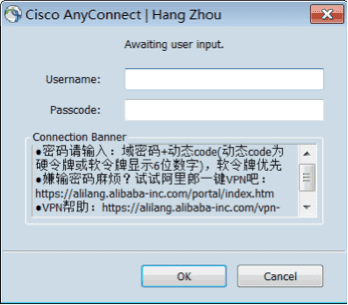
2. Start Cisco Anyconnect, set the server address to vpn.alibaba-inc.com, the user name is your personal account,
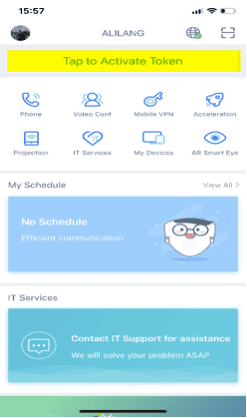
the password is the personal account password plus 6 digit Alilang token dynamic password.
7.Unable to connect to specific security gateway with Cisco anyconnect.
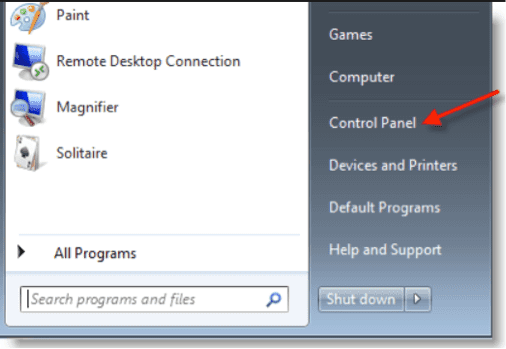
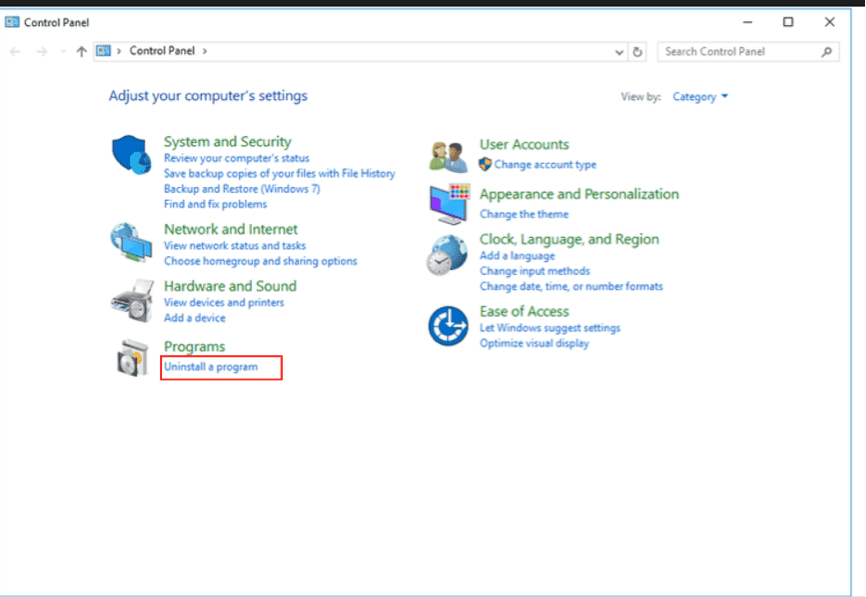
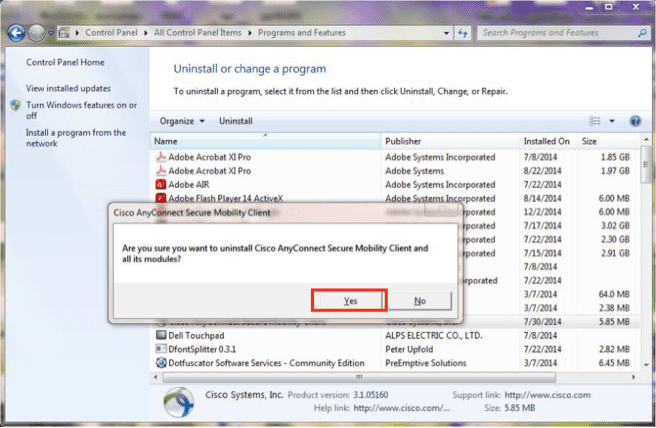
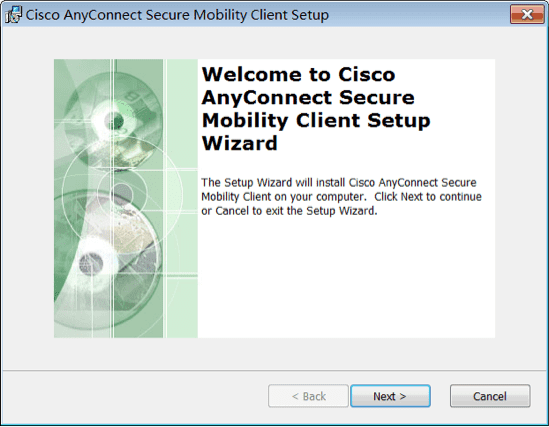
Uninstall the current Cisco anyconnect, then download and install the latest version. Download Cisco anyconnect,
windows
click here, mac
click here
If you are still unable to connect with the newest version, please see the following:
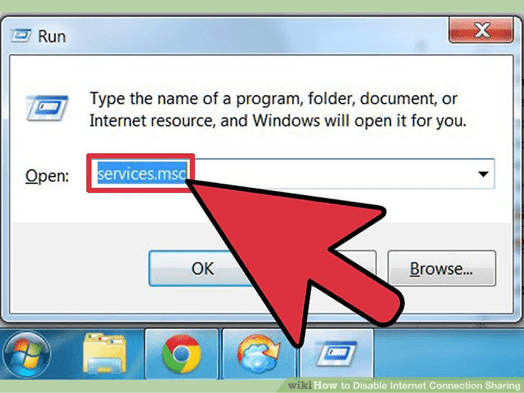
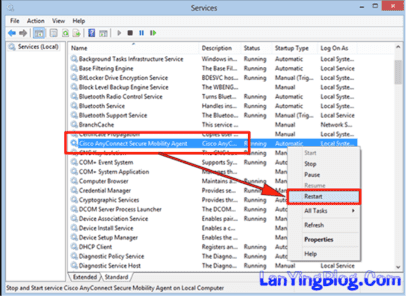
- Click "Start", type "services.msc" in the search field and press Enter.
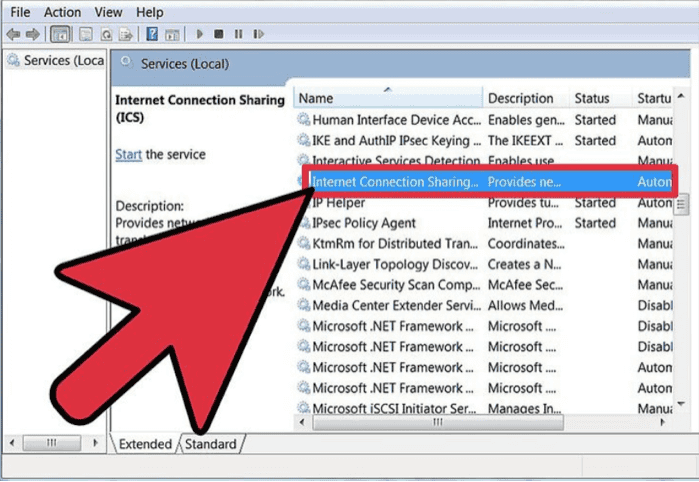
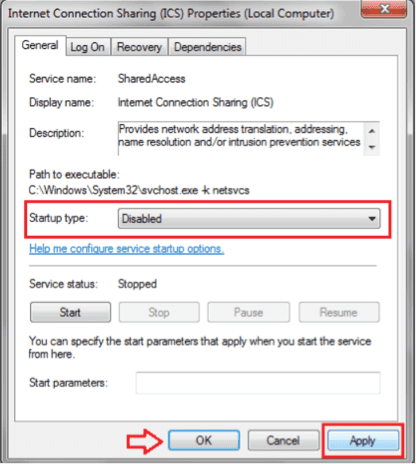
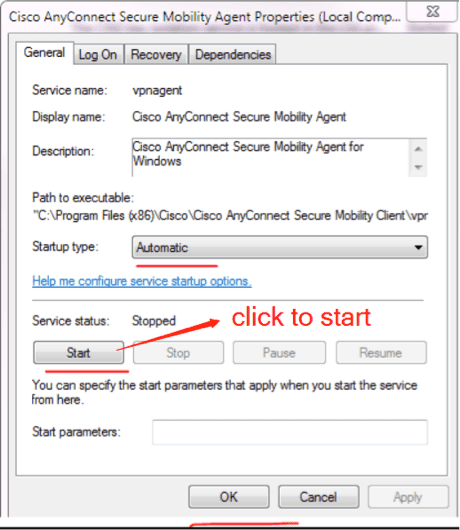
- In the interface on the right to find the "Internet Connection Sharing (ICS)", double-click the service status
to "stopped", and click OK.