
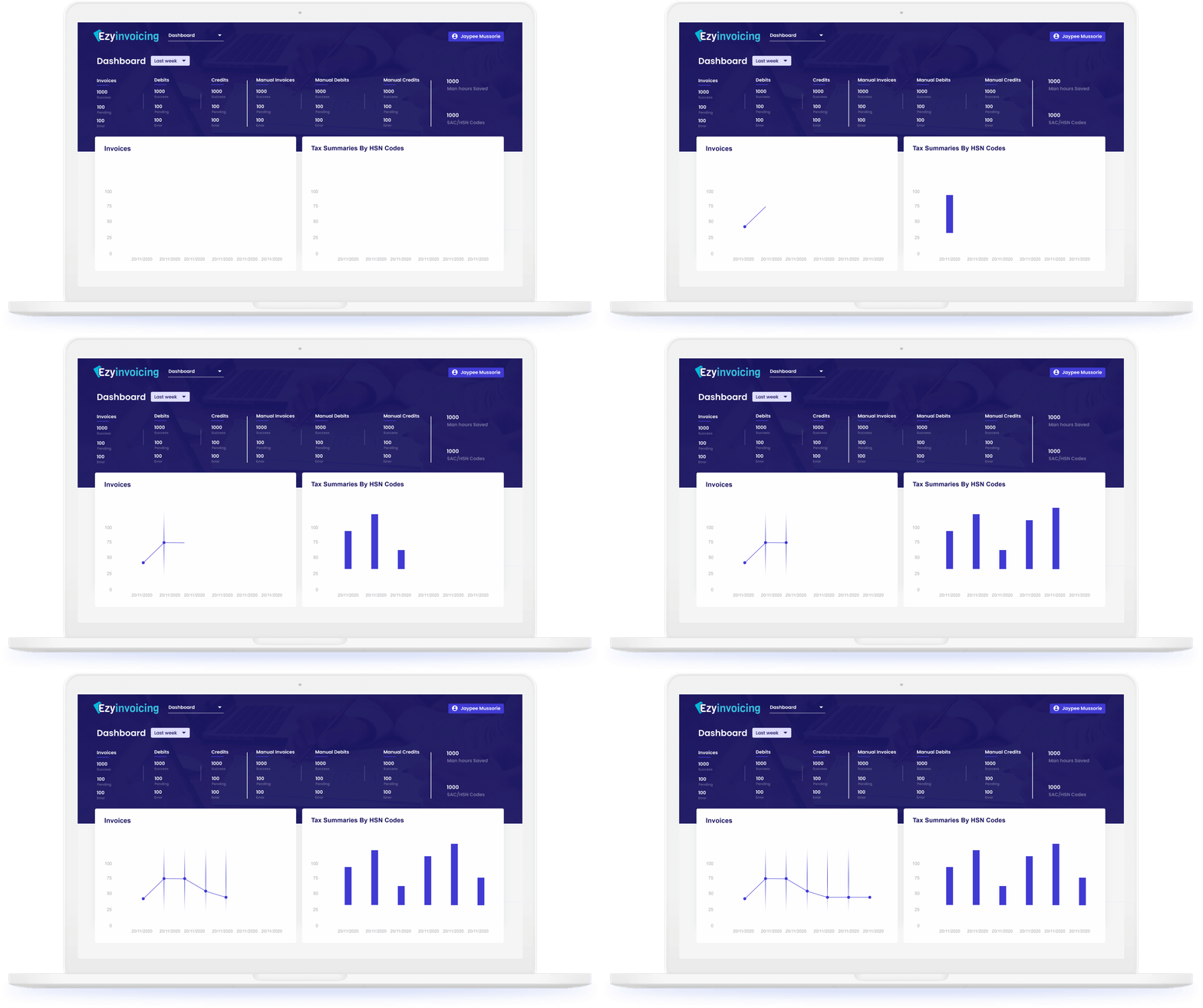

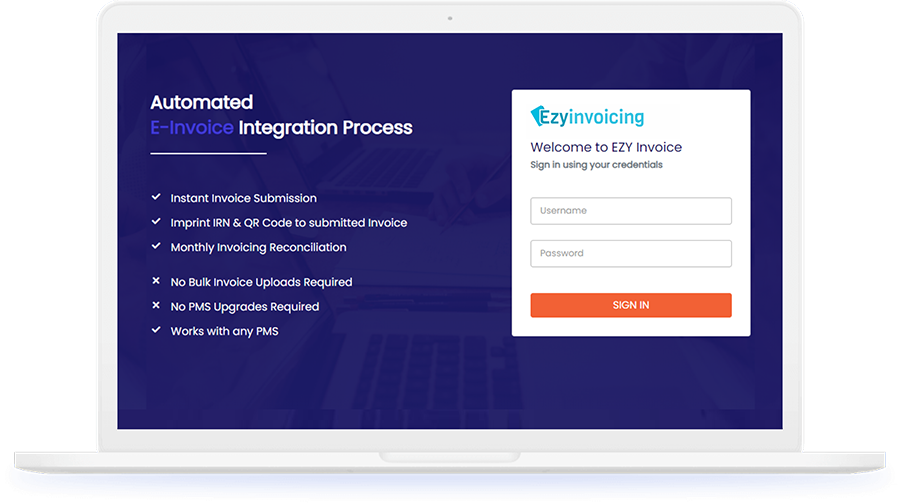
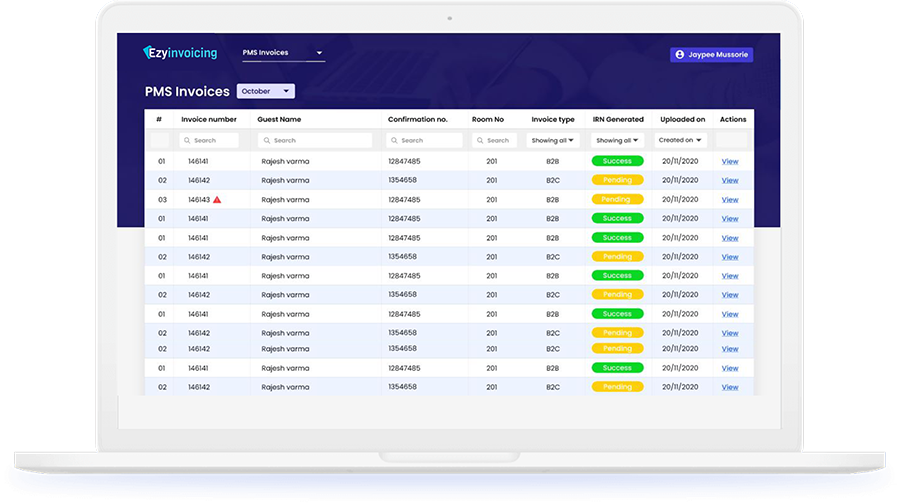
Generates invoices directly through any PMS/POS system without modifying existing processes
Supports robust error handling mechanism to ensure you generate
e-invoices without any
worries
Available both on cloud or on-premise deployment models as per client's convenience
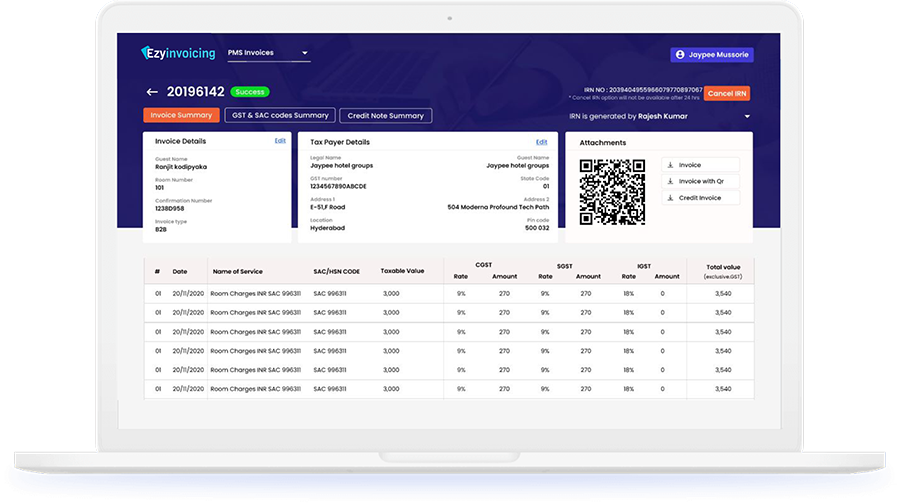
One-click reconciliation of e-Invoice data with GSTR-1 data to take care of your compliance needs
Ability to configure custom templates as per your business need to print
e-Invoices in a
single click



Equipped with an SSL encryption for all on cloud deployments & also offer 2F Authentication mechanisms
24x7 in-house technical support and advisory services, dedicated key account manager and priority access to NIC nokia 1208 imei change work

Affordable price, high-end product and great value. No other hidden charges If you have landed on this article, you

Allows integrations with multiple third party systems/partners to leverage the best out of its friendly RESTFUL API architecture Almost certainly NO for three reasons: 1

Best-in-class tech first company with deepest domain expertise in hospitality
If you have landed on this article, you are likely wondering one thing: Can you actually change the IMEI number of a Nokia 1208, and if so, does it work against modern networks?
Yes, a professional JTAG box or a JAF box can rewrite the IMEI. The phone will boot, show the new number, and theoretically make calls on a 2G network.
Almost certainly NO for three reasons: 1. 2G Network Shutdown The Nokia 1208 is a GSM 900/1800 phone. It has no 3G, no 4G, no VoLTE. In 2023/2024, most developed nations (USA, UK, Australia, parts of Europe) have switched off their 2G networks. Even if you successfully change the IMEI, you will have zero signal bars . The phone cannot connect because the network no longer exists. 2. IMEI Blacklist Databases are Centralized In the past, changing an IMEI locally fooled your local carrier. Today, the CEIR (Central Equipment Identity Register) shares blacklist data across hundreds of carriers globally. Unless you change the IMEI to a completely unused, legitimate number (which is illegal), the phone will remain blocked across most networks. 3. Hardware vs. Software Mismatch Even if the IMEI is changed, the Nokia 1208’s baseband processor broadcasts its hardware signature. Advanced carrier systems (like TAC (Type Allocation Code) checking) will flag a Nokia 1208 running an IMEI that belongs to, say, a Samsung phone. The network will reject the connection. Step-by-Step Guide (For Repair Technicians Only) Disclaimer: This guide is for educational and repair purposes on devices you own legally. Changing IMEI to bypass a blacklist is a felony in most countries (USA: 18 U.S.C. § 1029, UK: Fraud Act 2006).
In the mid-2000s, the Nokia 1208 was a titan of simplicity. A monochrome screen, a durable keypad, and a battery that lasted nearly a week. It was the workhorse of its era. Today, however, the device has found a bizarre second life in the hands of hobbyists, repair technicians, and, occasionally, individuals searching for a very specific, controversial keyphrase:
Let’s break down the technology, the methods, the legal landscape, and the ultimate verdict. The International Mobile Equipment Identity (IMEI) is a 15-digit unique code assigned to every mobile device. Think of it as a social security number for your phone. It is used by cellular networks to identify valid devices and—critically—to block stolen phones.
If you have landed on this article, you are likely wondering one thing: Can you actually change the IMEI number of a Nokia 1208, and if so, does it work against modern networks?
Yes, a professional JTAG box or a JAF box can rewrite the IMEI. The phone will boot, show the new number, and theoretically make calls on a 2G network.
Almost certainly NO for three reasons: 1. 2G Network Shutdown The Nokia 1208 is a GSM 900/1800 phone. It has no 3G, no 4G, no VoLTE. In 2023/2024, most developed nations (USA, UK, Australia, parts of Europe) have switched off their 2G networks. Even if you successfully change the IMEI, you will have zero signal bars . The phone cannot connect because the network no longer exists. 2. IMEI Blacklist Databases are Centralized In the past, changing an IMEI locally fooled your local carrier. Today, the CEIR (Central Equipment Identity Register) shares blacklist data across hundreds of carriers globally. Unless you change the IMEI to a completely unused, legitimate number (which is illegal), the phone will remain blocked across most networks. 3. Hardware vs. Software Mismatch Even if the IMEI is changed, the Nokia 1208’s baseband processor broadcasts its hardware signature. Advanced carrier systems (like TAC (Type Allocation Code) checking) will flag a Nokia 1208 running an IMEI that belongs to, say, a Samsung phone. The network will reject the connection. Step-by-Step Guide (For Repair Technicians Only) Disclaimer: This guide is for educational and repair purposes on devices you own legally. Changing IMEI to bypass a blacklist is a felony in most countries (USA: 18 U.S.C. § 1029, UK: Fraud Act 2006).
In the mid-2000s, the Nokia 1208 was a titan of simplicity. A monochrome screen, a durable keypad, and a battery that lasted nearly a week. It was the workhorse of its era. Today, however, the device has found a bizarre second life in the hands of hobbyists, repair technicians, and, occasionally, individuals searching for a very specific, controversial keyphrase:
Let’s break down the technology, the methods, the legal landscape, and the ultimate verdict. The International Mobile Equipment Identity (IMEI) is a 15-digit unique code assigned to every mobile device. Think of it as a social security number for your phone. It is used by cellular networks to identify valid devices and—critically—to block stolen phones.