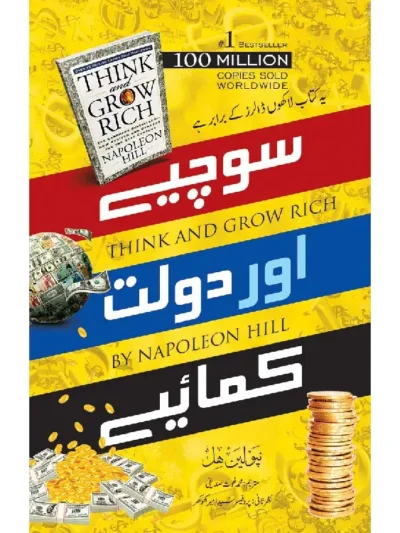
Think and Grow Rich by Napoleon Hill Urdu Book
Original price was: ₨ 2,000.₨ 789Current price is: ₨ 789.
That dam is finally breaking. Filmmakers like Jeo Baby ( The Great Indian Kitchen ) and writers like Hareesh and S. Hareesh have forced a confrontation. This film is a cultural grenade. It exposed the patriarchal oppression hidden behind the idyllic picture of a Keralite household. The ritual of Sadya (the Onam feast), the brass vessels, the sharpening of the Aruval (knife), and the daily grind of filtering coffee—all turned into symbols of domestic enslavement. It sparked real-world discussions about divorce, menstrual purity, and temple entry in Kerala. Never before had a film so directly attacked the "sacred" domestic culture of the state. Caste on Screen Films like Nayattu (2021) and Paleri Manikyam (2009) have tackled police brutality and caste violence without the usual cinematic gloss. Nayattu follows three police officers on the run, showing how the caste system infects the bureaucracy and the judiciary. This is modern Kerala: literate, politically aware, but still grappling with its deep-seated feudal shadows. Part VII: The Future – Where is the Culture Headed? As of 2026, Malayalam cinema stands at a crossroads. On one hand, films like 2018: Everyone is a Hero (2023) have shown that a disaster film about the Kerala floods can become a pan-Indian blockbuster because of its hyper-local humanism. On the other hand, there is a push towards genre-bending global cinema ( Bhoothakaalam , Bramayugam ) that still uses Kerala folklore—like the Yakshi (vampire) or the Chathan (spirit)—as the core.
But it also serves as a map. For an outsider, watching a Malayalam film is like reading a geographical and psychological survey of the state. You learn that a chaya (tea) is never just tea; it is a social contract. You learn that a paddy field is never just agriculture; it is a history of class struggle. You learn that a Onam sadya is never just a meal; it is a complex ritual of inclusion and exclusion. mallu hot boob press hot
In the end, the relationship is symbiotic. Kerala culture provides the endless raw material—the rituals, the conflicts, the dialects, the monsoons. And Malayalam cinema, in return, provides the preservation, the critique, and the evolution of that culture. As long as the coconut trees sway and the Panchavadyam drums beat, there will be a story waiting to be framed. And as long as there is a camera in Kerala, the world will have a window into one of the most fascinating, contradictory, and vibrant cultures on earth. If you found this article insightful, share your thoughts below. Which Malayalam film do you believe best captures the spirit of Kerala? That dam is finally breaking
Conversely, to live in Kerala is to see its life reflected back on screen with an unsettling, often uncomfortable clarity. This article explores the intricate dance between the 70-mm screen and the cultural, political, and social fabric of "God’s Own Country." Kerala is distinct. It boasts the highest literacy rate in India, a matrilineal history in certain communities, a robust public healthcare system, and a political landscape that swings violently between the Communist Party of India (Marxist) and the Indian National Congress. It is a land of tharavads (ancestral homes), Theyyam rituals, Onam festivals, and a cuisine dominated by coconut and seafood. This film is a cultural grenade
In the pantheon of Indian cinema, each regional film industry is a distinct universe. Bollywood peddles in aspirational spectacle, Tamil cinema thrives on mass heroism and raw energy, and Telugu cinema is a colossus of visual effects and larger-than-life mythology. But Malayalam cinema, hailing from the southwestern state of Kerala, occupies a singular space. Often dubbed the "parallel cinema of the mainstream," it is an industry that refuses to divorce itself from the soil it grows from. To understand Malayalam cinema is to understand Kerala—its red earth, its backwaters, its political fervor, its literacy, and its quiet, simmering contradictions.
Cinematographers like Santosh Sivan and M. J. Radhakrishnan treat the paddy fields and coconut lagoons with the reverence of a temple. The visual identity of Malayalam cinema is distinct: muted green palettes, overcast skies, and cramped interiors filled with brass lamps ( nilavilakku ) and wooden furniture. This is not set design; this is archival documentation. For all its progressivism, Malayalam cinema has historically been dominated by the upper-caste (Nair, Syrian Christian, Namboodiri) gaze. For decades, the Dalit or Adivasi perspective was absent, or limited to the role of the comic sidekick or the servile helper.