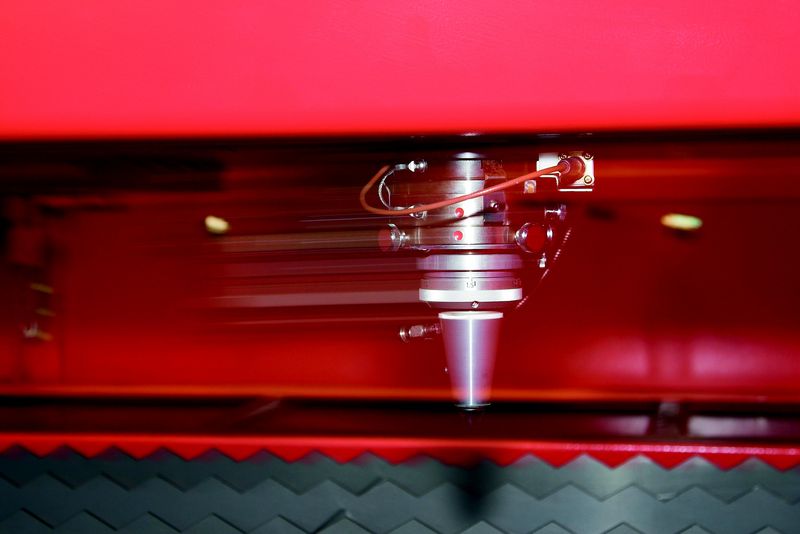
The QUATTRO is one of the most flexible, efficient and compact lasers on the market. Many metal working companies have a large number of components to manufacture but only need to produce one or two at a time. Ease of use, plus low operating costs make the QUATTRO the ideal solution for low volumes, without forgoing precision and quality.
This machine is no longer available.
Find the laser machine that suits your needs
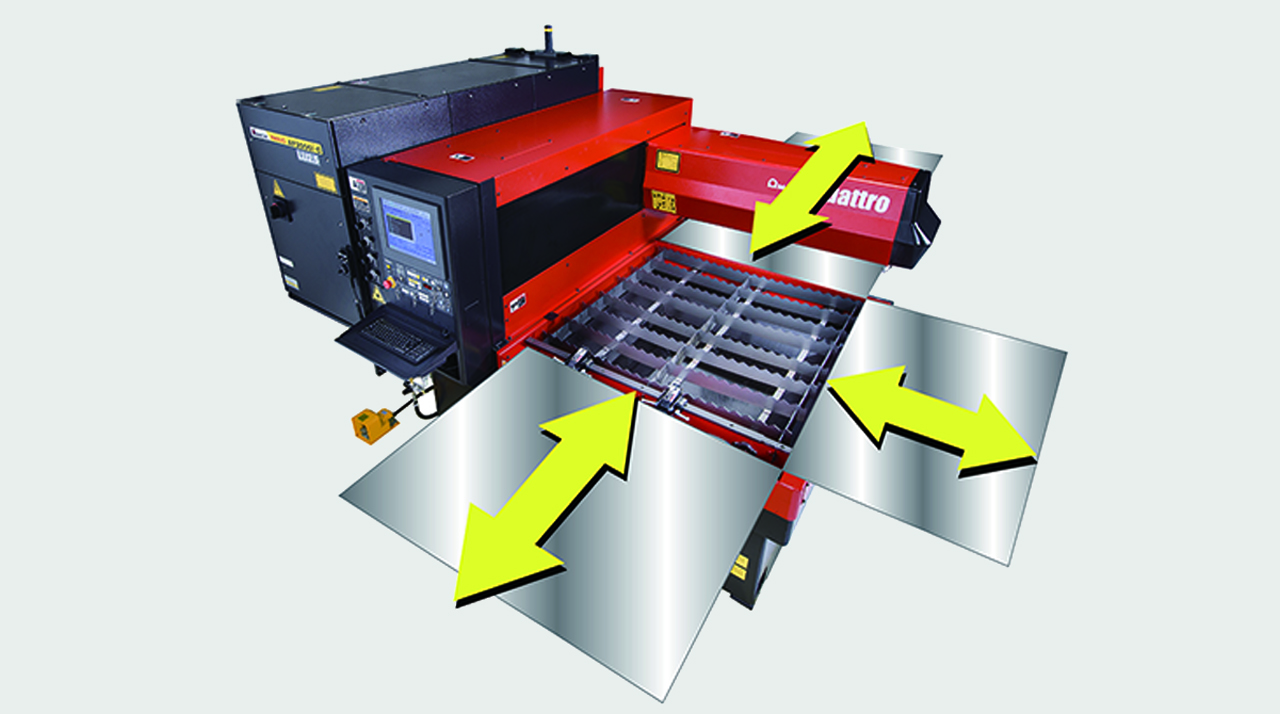
FULL ACCESS TO THE CUTTING AREA:
The three accessible sides of the QUATTRO laser facilitate sheet metal loading and unloading. Large-sized sheets which are bigger than the work area can also be processed, repositioning them manually.
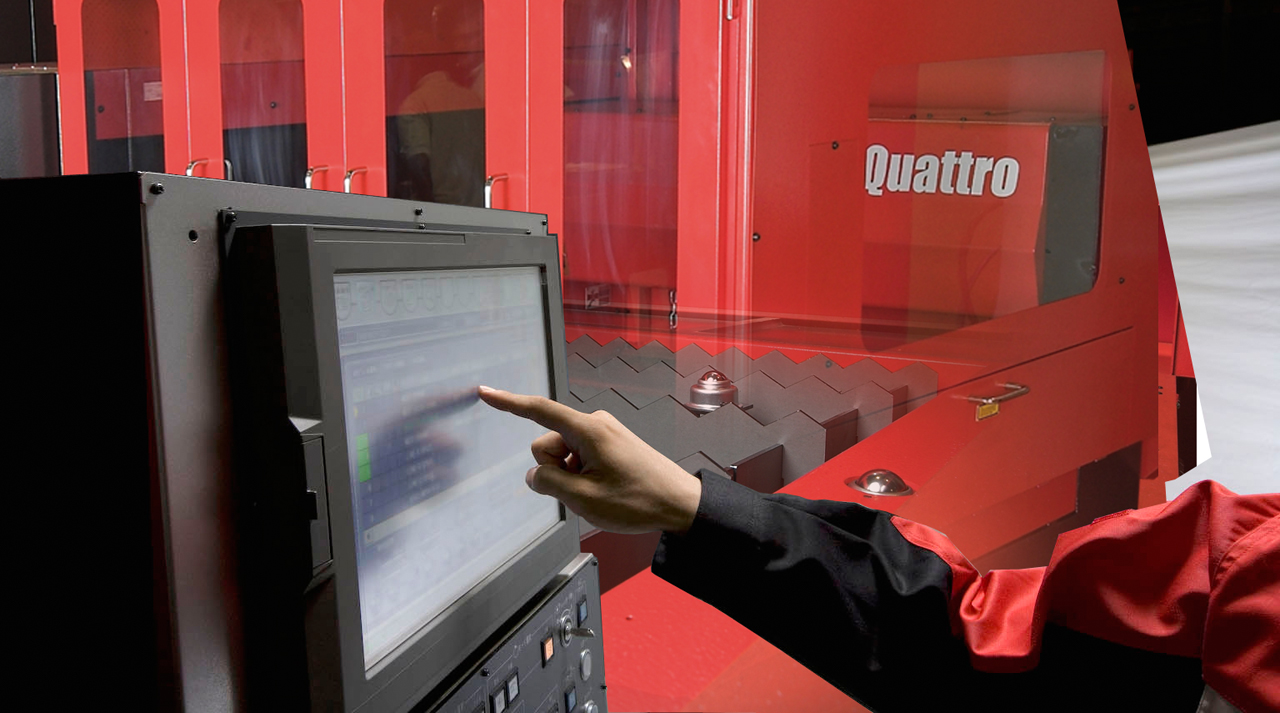
COMPACT STRUCTURE:
With a footprint of just 6.4 m2, the QUATTRO is AMADA's smallest laser. The oscillator and numerical control are contained within the machine to maintain its extremely compact size.
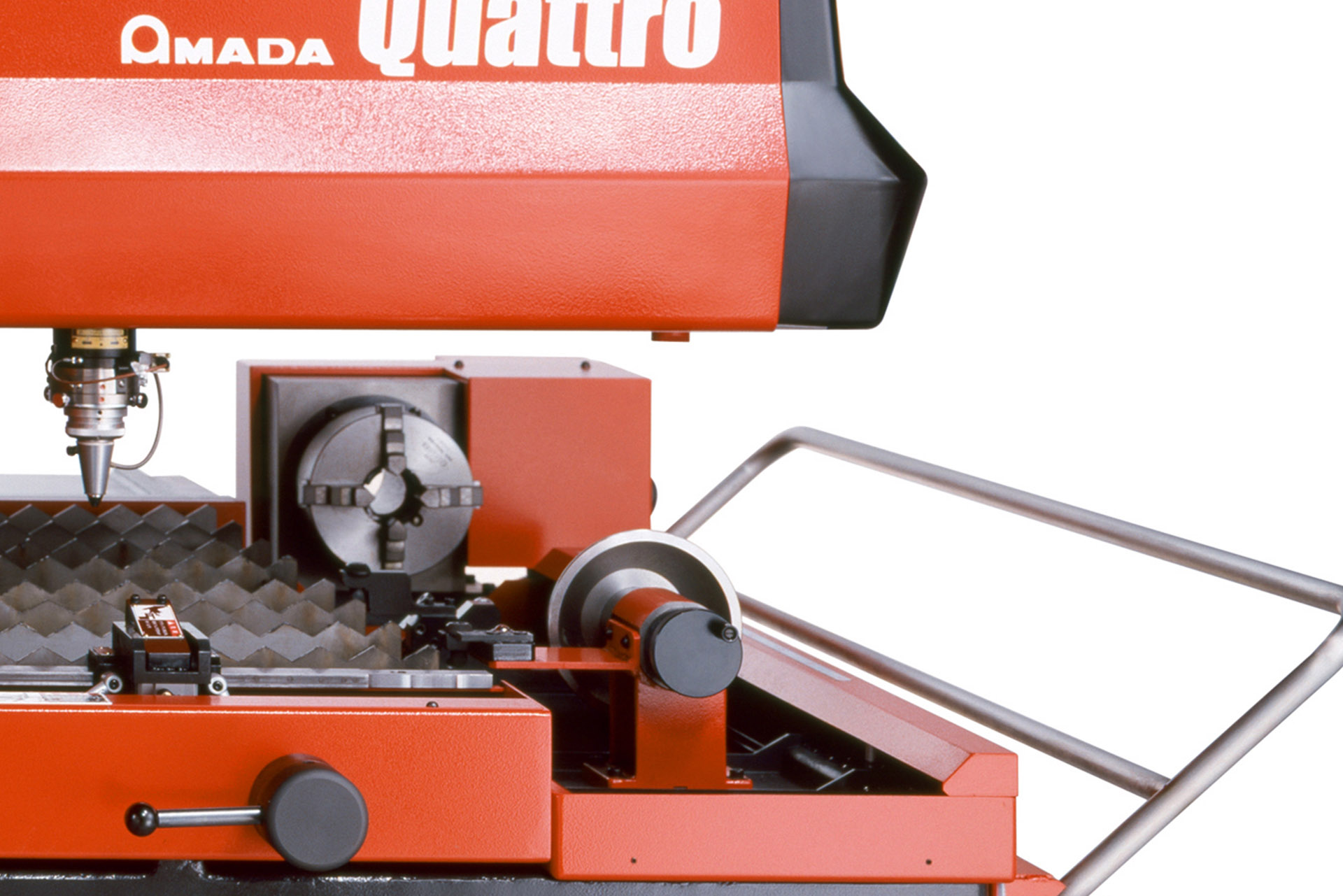
DIVERSIFIED PROCESSING:
With the QUATTRO, not only sheet metal but rectangular and square tubes can be processed, providing even greater flexibility. (Option)
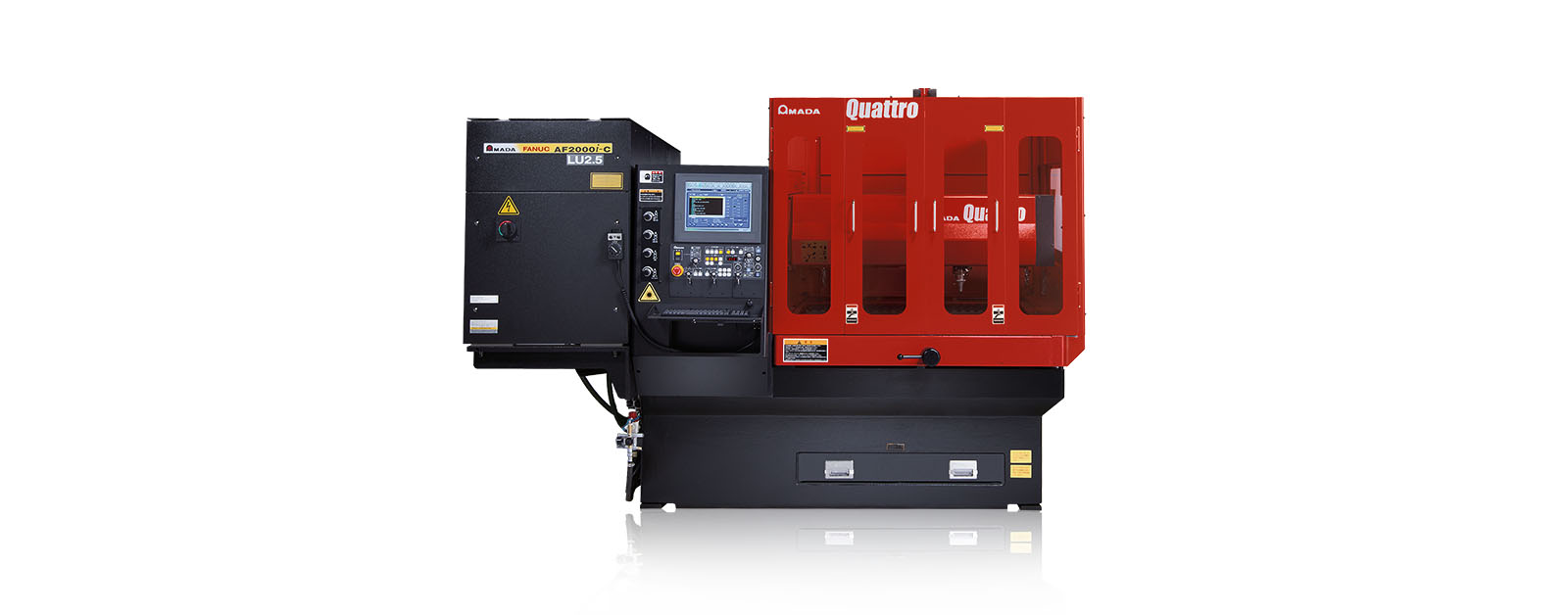
FULL ACCESS TO THE CUTTING AREA:
The three accessible sides of the QUATTRO laser facilitate sheet metal loading and unloading. Large-sized sheets which are bigger than the work area can also be processed, repositioning them manually.
COMPACT STRUCTURE:
With a footprint of just 6.4 m2, the QUATTRO is AMADA's smallest laser. The oscillator and numerical control are contained within the machine to maintain its extremely compact size.
DIVERSIFIED PROCESSING:
With the QUATTRO, not only sheet metal but rectangular and square tubes can be processed, providing even greater flexibility. (Option)
| QUATTRO | QUATTRO | |
|---|---|---|
| Laser power (W) | 1000 | 2500 |
| Machine type | CO₂ flying optic laser | CO₂ flying optic laser |
| Working range X x Y (mm) | 1250 x 1250 | 1250 x 1250 |
| Working range Z-axis (mm) | 100 | 100 |
| Table loading weight (kg) | 80 | 160 |
Material thickness (max.)*: | ||
| - Mild steel (mm) | 6 | 12 |
| - Stainless steel (mm) | 2 | 5 |
| - Aluminium (mm) | 1 | 4 |
Dimensions: | ||
| Length (mm) | 2900 | 2950 |
| Width (mm) | 2450 | 2450 |
| Height (mm) | 2160 | 2160 |
| Weight (kg) | 3750 | 4150 |
* Maximum thickness value depends on material quality and environmental conditions
Technical data can vary depending on configuration / options
Please contact us for more details and options or download our brochure

For your safe use.
Be sure to read the user manual carefully before use.
When using this product, appropriate personal protection equipment must be used.
Laser class 1 when operated in accordance to EN 60825-1
The simulation begins with the Kraelion horde approaching Riverton, having learned of its prosperity and strategic location. The villagers, aware of the Kraelion's reputation, are preparing to defend themselves. The council of elders has decided to mobilize the village militia, which consists of 50 able-bodied men, and to prepare the village defenses.
For the purposes of our simulation, let us consider a hypothetical village, which we will call "Riverton." Riverton is a small, rural settlement located in a fertile valley surrounded by rolling hills and dense forests. The village is home to approximately 200 residents, who engage in agriculture, animal husbandry, and craftsmanship. The village is led by a council of elders, who make decisions regarding the allocation of resources, defense, and diplomacy. A Village Targeted by Barbarians - A Simulation...
As the Kraelion horde approaches, the villagers take up positions on the walls and in the guard towers. The Kraelion, confident in their numerical superiority, launches a frontal assault on the village. The villagers, however, are well-prepared and inflict significant casualties on the attackers. The simulation begins with the Kraelion horde approaching
As the siege continues, the villagers begin to feel the effects of hunger, thirst, and fatigue. The council of elders must make difficult decisions regarding the allocation of resources, the deployment of the militia, and the negotiation of a potential surrender. For the purposes of our simulation, let us
The scenario of a village targeted by barbarians is a timeless and universal theme that has played out across the centuries, from the ancient civilizations of Mesopotamia and Egypt to the medieval towns of Europe and the villages of Africa and Asia. The threat of violence and destruction posed by marauding bands of warriors has been a constant presence in human history, shaping the development of societies, cultures, and economies. In this article, we will explore the dynamics of such conflicts through a simulation of a village targeted by barbarians, examining the factors that influence the outcome of these interactions and the strategies that can be employed to mitigate the risks.
The barbarian horde, which we will call the "Kraelion," is a group of 500 warriors who have been raiding and pillaging villages in the region for months. The Kraelion is led by a powerful chieftain, who seeks to expand his territory, secure resources, and demonstrate his strength.
Despite their bravery, the villagers are eventually forced to retreat behind the palisade, where they continue to resist the Kraelion's attacks. The Kraelion, frustrated by their inability to breach the village defenses, begins to use siege engines and catapults to bombard the village.